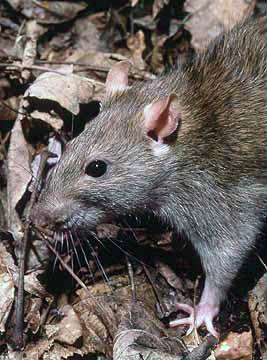
When is National Rat Catcher's Day Celebrated?
Ratcatcher's Day, Rat-catcher's Day or Rat Catcher's Day is celebrated on 26 June or 22 July,
This holiday commemorating the myth of the Pied Piper of Hamelin. The town of Hamelin in Germany uses the June date. The confusion of dates is because the Brothers Grimm cite 26 June 1284 as the date the Pied Piper led the children out of the town, while the poem by Robert Browning gives it as 22 July 1376.
- - - - - - - - - - - - - - - - - - - - - - - - - - - - - - - - - - - - - - - - - - - - - - - - - - - - - - - - - - - - - - - - - - - - - - - - - - - - - - - - - - - - - - - - - - - - - - - - - - - - - - - -
What is this holiday about?
This holiday commemorating the myth of the Pied Piper of Hamelin.
In 1284, while the town of Hamelin was suffering from a rat infestation, a man dressed in pied clothing appeared, claiming to be a rat-catcher. He promised the townsmen a solution for their problem with the rats. The townsmen in turn promised to pay him for the removal of the rats. The man accepted, and played a musical pipe to lure the rats with a song into the Weser River, where all of them drowned. Despite his success, the people reneged on their promise and refused to pay the rat-catcher the full amount of money. The man left the town angrily, but vowed to return some time later, seeking revenge. On Saint John and Paul's day while the inhabitants were in church, he played his pipe yet again, dressed green, like a hunter, this time attracting the children of Hamelin. One hundred thirty boys and girls followed him out of the town, where they were lured into a cave and never seen again. Depending on the version, at most three children remained behind (one of whom was lame and could not follow quickly enough, the other one was deaf and followed the other children out of curiosity and the last was blind and unable to see where they were going) who informed the villagers of what had happened when they came out of the church.
Other versions (but not the traditional ones) claim that the Piper lured the children into the river and let them drown like the rats or led the children to a cave on Köppen Hill or Koppelberg Hill (outside of Hamelin). Another version is that the Pied Piper hypnotized the children into following him to the top of Koppelberg Hill where he took them to a mystery land and had his wicked way, or a place called Koppenberg Mountain and returned them after payment or that he returned the children after the villagers paid several times the original amount of gold.
Although research has been conducted for centuries, no explanation for the historical event is agreed upon. In any case, the rats were first added to the story in a version from c. 1559 and are absent from earlier accounts.
- - - - - - - - - - - - - - - - - - - - - - - - - - - - - - - - - - - - - - - - - - - - - - - - - - - - - - - - - - - - - - - - - - - - - - - - - - - - - - - - - - - - - - - - - - - - - - - - - - - - - - - -
Definition of a rat catcher:
Rat-catching is the occupation of catching rats as a form of pest control.
• Techniques and risks: Rat-catchers would capture rats by hand, often with specially-bred vermin terriers, or with traps. Rats are rarely seen in the open, preferring to hide in holes, haystacks and dark locations. Payment would be high for catching and selling rats to breeders. A rat-catcher's risk of being bitten is high, as is the risk of acquiring a disease from a rat bite. wikipedia
- - - - - - - - - - - - - - - - - - - - - - - - - - - - - - - - - - - - - - - - - - - - - - - - - - - - - - - - - - - - - - - - - - - - - - - - - - - - - - - - - - - - - - - - - - - - - - - - - - - - - - - -
Origin of this Holiday
Our research did not find the creator of this day. We did however find that this holiday has been celebrated for many many years. There is plenty of documentation to support that this holiday does indeed exist. This is referred to as a "National" day. However, we did not find any congressional records or presidential proclamations for this day. Even though we didn't, this is still a holiday to celebrate.
We found recognition about this holiday from:
Calendar sites and personal Internet sites that blog and share information about this holiday.
- - - - - - - - - - - - - - - - - - - - - - - - - - - - - - - - - - - - - - - - - - - - - - - - - - - - - - - - - - - - - - - - - - - - - - - - - - - - - - - - - - - - - - - - - - - - - - - - - - - - - - - -
Resources:
Categories:
- - - - - - - - - - - - - - - - - - - - - - - - - - - - - - - - - - - - - - - - - - - - - - - - - - - - - - - - - - - - - - - - - - - - - - - - - - - - - - - - - - - - - - - - - - - - - - - - - - - - - - - -
History
The earliest mention of the story seems to have been on a stained glass window placed in the Church of Hamelin c. 1300. The window was described in several accounts between the 14th century and the 17th century. It was destroyed in 1660. Based on the surviving descriptions, a modern reconstruction of the window has been created by Hans Dobbertin (historian). It features the colorful figure of the Pied Piper & several figures of children dressed in white.
This window is generally considered to have been created in memory of a tragic historical event for the city. Also, Hamelin town records start with this event. The earliest written record is from the town chronicles in an entry from 1384 which states:
"It is 100 years since our children left"