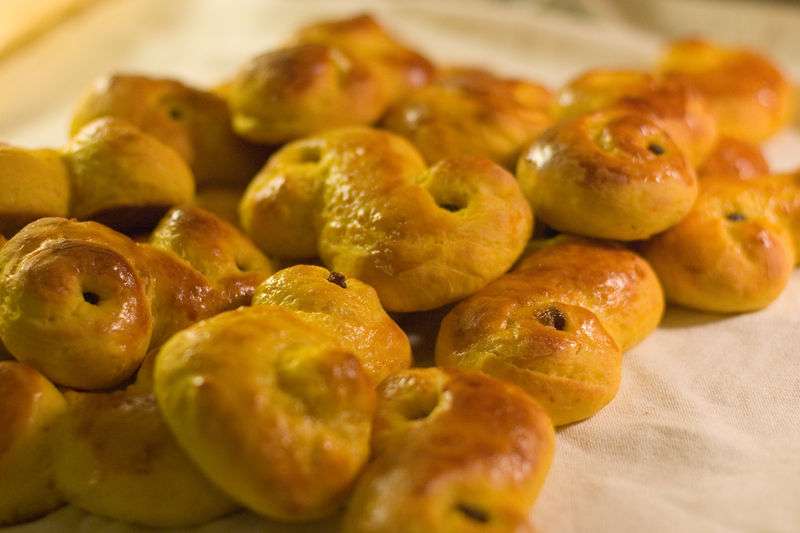
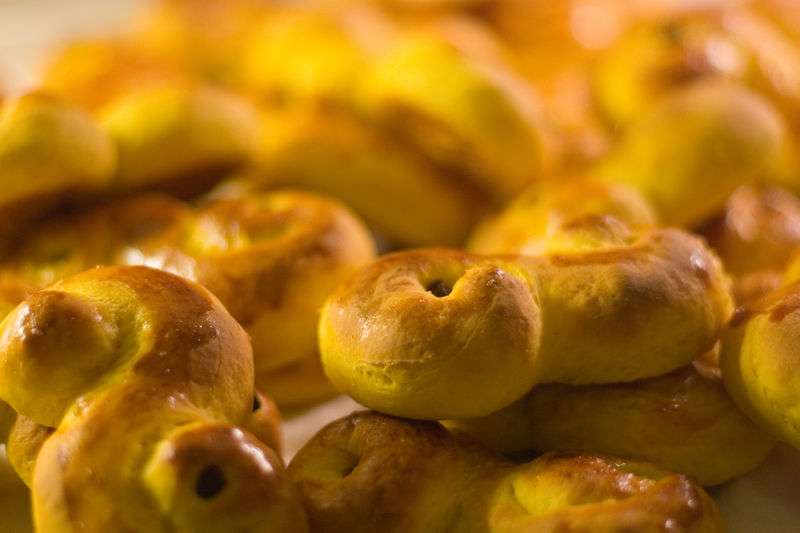
A saffron bun is a rich yeast dough bun that is flavoured with saffron and cinnamon or nutmeg and contains currants.
In Swedish lussebulle or lussekatt (a lussekatt has four rolls)
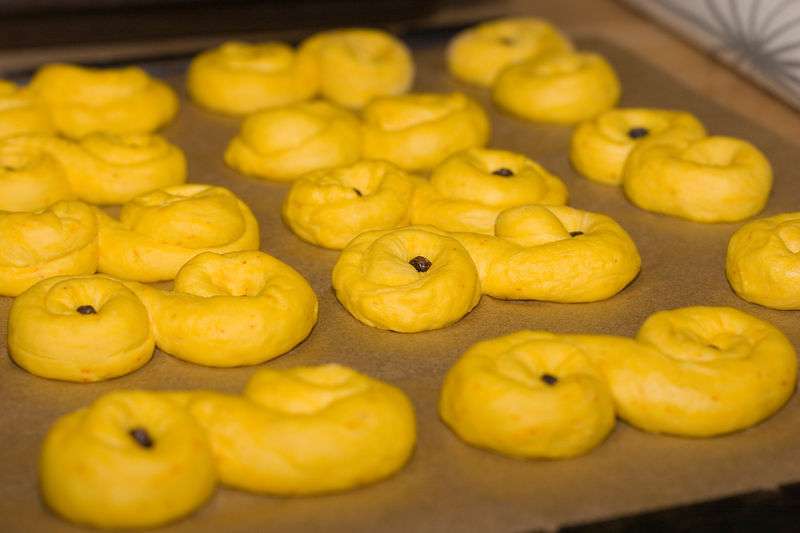
In Sweden, no cinnamon or nutmeg is used in the bun, and raisins are used instead of currants. The buns are baked into many traditional shapes, of which the simplest is a reversed S-shape.
In England, the buns were traditionally baked on sycamore leaves and dusted with powdered sugar. This "revel bun" from Cornwall is baked for special occasions, such as anniversary feasts (revels), or the dedication of a church. In the West of Cornwall large saffron buns are also known as "tea treat buns" and are associated with Methodist Sunday School outings or activities. Most commercially available saffron buns and cakes available in Cornwall today contain food dyes that enhance the natural yellow provided by saffron. The very high cost (it is the world's most expensive spice by weight) makes the inclusion of sufficient saffron to produce a rich colour an uneconomical option. The addition of food colouring in Cornish saffron buns was already common by the end of the First World War when the scarcity of saffron forced bakers to find other ways to colour their products. Larger versions of the saffron bun baked in a loaf tin are known as saffron cake.
---------------------------------------------------------------------------------------------------------------------------
Recipe
Ingredients
• ½ tsp. crushed saffron threads (¼ tsp. powder)
• ¾ c. (180ml) half and half, lukewarm...., half and half
refers to a mixture of 50% milk and 50% cream.
• two pkgs. yeast (4½ tsp.) dissolved in ¼ c. lukewarm
water
• ½ c. (120g) melted butter
• two eggs, beaten
• ¾ c. (180g) sugar
• one tsp. salt
• 4-5 c. sifted flour
• Raisins to decorate
Procedure
1. Mix saffron in warm half and half and let stand while dissolving yeast in the water.
2. Mix half of flour with other ingredients and beat until well blended.
3. Add flour until dough is smooth but not too firm. Knead on floured surface for ten minutes.
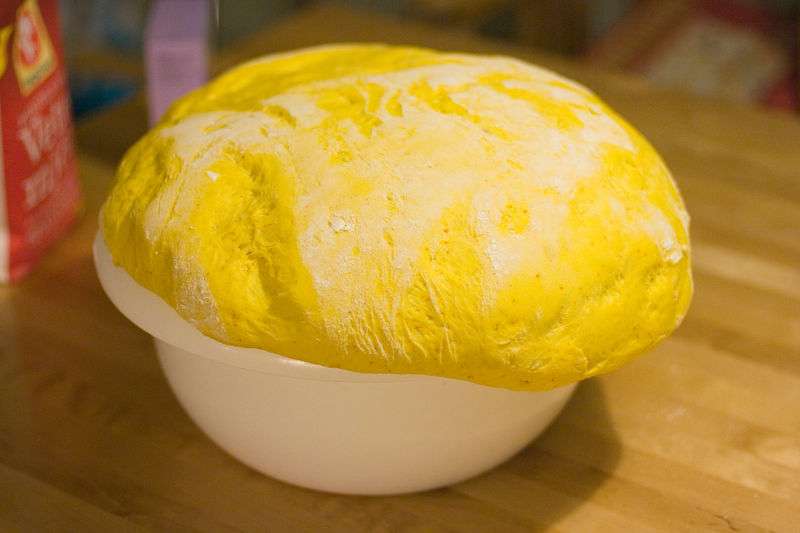
4. Place dough in buttered bowl and let rise until double (1½ hours).
5. Roll seven-inch-long sticks and form S-shaped buns with their ends curled in. Place a raisin in each curl.
6. Place buns on buttered sheet, cover and let rise 45 minutes. Brush with beaten egg and bake at 375-400°F (190-200°C) for 10-15 minutes.
-----------------------------------------------------------------------------------------------------------------------------
Holiday recipes deserve a dedicated section because of their variety and richness.
• Saffron should always be soaked in hot (not boiling!) water before use, about three times as much water as saffron. If you have the time, it is best to soak the whole saffron strands for about 2 hours. Otherwise, soak for at least 20 minutes, then crush the strands of saffron with the back of a spoon, to release the flavours and colour in to the water. Add the saffron and soak water to the rest of the ingredients, as directed by the recipe.
• Saffron is used in many Spanish recipes, including paella & fabada Asturiana, and in the most famous saffron-based Italian dish, the risotto alla milanese. Outside Europe, it is a vital ingredient of many South & Central Asian, & Arabian dishes.
• Saffron is the dried stigma and part of the style of the saffron crocus. It has a pleasant spicy smell, and it contains a dye that colours food a distinctive deep golden colour. It is one of the most expensive of all spices