- - - - - - - - - - - - - - - - - - - - - - - - - - - - - - - - - - - - - - - - - - - - - - - - - - - - - - - - - - - - - - - - - - - - - - - - - - - - - - - - - - - - - - - - - - - - - - - - - - - - - - - - - - -
British school children
have traditionally nicknamed the dish frog spawn, due to its appearance.[1] American children often call it fish eyes and glue.
- - - - - - - - - - - - - - - - - - - - - - - - - - - - - - - - - - - - - - - - - - - - - - - - - - - - - - - - - - - - - - - - - - - - - - - - - - - - - - - - - - - - - - - - - - - - - - - - - - - - - - - - - - -
Cooking facts:
Flakes, sticks, and pearls must be soaked well before cooking, to rehydrate them; they will easily absorb water equal to twice their volume, becoming leathery and swollen. All these products traditionally are white, but sticks and pearls may be colored. The oldest and most common color is brown, but pastel colors are now available. In all its forms, tapioca starch is opaque before cooking and becomes translucent when cooked.
- - - - - - - - - - - - - - - - - - - - - - - - - - - - - - - - - - - - - - - - - - - - - - - - - - - - - - - - - - - - - - - - - - - - - - - - - - - - - - - - - - - - - - - - - - - - - - - - - - - - - - - - - - -
Classic Tapioca Pudding Recipe
Tapioca pudding is a great comfort food and can be served warm or cold.
Ingredients
• 3 cups whole milk
• 1/2 cup quick-cooking tapioca
• 1/2 cup white sugar
• 1/4 teaspoon salt
• 2 eggs, beaten
• 1/2 teaspoon vanilla extract
Directions
1) Stir together the milk, tapioca, sugar, and salt in a medium saucepan.
Bring the mixture to a boil over medium heat, stirring constantly. Reduce
heat to low; cook and stir 5 minutes longer.
2) Whisk 1 cup of the hot milk mixture into the beaten eggs, 2 tablespoons
at a time until incorporated.
3) Stir the egg mixture back into the tapioca until well mixed.
4) Bring the pudding to a gentle simmer over medium-low heat; cook
and stir 2 minutes longer until the pudding becomes thick enough to evenly
coat the back of a metal spoon.
5) Remove from the heat and stir in the vanilla.
The pudding may be served hot or poured into serving dishes and refrigerated several hours until cold.
- - - - - - - - - - - - - - - - - - - - - - - - - - - - - - - - - - - - - - - - - - - - - - - - - - - - - - - - - - - - - - - - - - - - - - - - - - - - - - - - - - - - - - - - - - - - - - - - - - - - - - - - - - -
Resources & References
It uses some material from Wikipedia/article © / and other related pages.
External Links
- - - - - - - - - - - - - - - - - - - - - - - - - - - - - - - - - - - - - - - - - - - - - - - - - - - - - - - - - - - - - - - - - - - - - - - - - - - - - - - - - - - - - - - - - - - - - - - - - - - - - - - - - - -
► More
What is tapioca pudding?
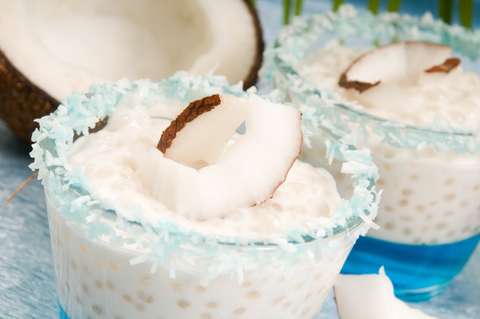
Tapioca pudding (similar to sago pudding) is a sweet pudding made with tapioca and either milk or cream. Coconut milk is also used in cases in which the flavor is preferred or in areas in which it is a commonplace ingredient for cooking. It is made in many cultures with equally varying styles, and may be produced in a variety of ways. Its consistency ranges from thin (runny), to thick, to firm enough to eat with a fork.
The pudding can be made from scratch using tapioca in a variety of forms: flakes, coarse meal, sticks, and pearls. Many commercial packaged mixes are also available. (Classic Recipe below)
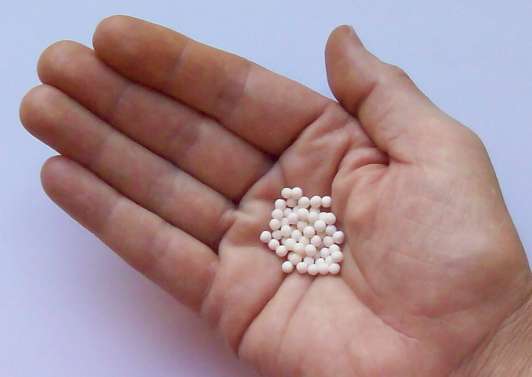
Pearl tapioca, before soaking.
This is high quality pearl tapioca:) uniform shape and size, even color, smooth, unbroken. This is so-called "small pearl" tapioca. It is also made from very highly refined tapioca starch, hence the very white color.
This file is licensed under the Creative Commons Attribution-Share Alike 3.0 Unported license.