I bet your planning a party & looking for activities to enjoy or some easy ways to entertain your guests. Am I right? If so, we have alot of ideas and information to spark your creative side. We list examples of inside and outside activities; popular for all types of parties. Now just so you know... there are all "types of activities" so have fun reading because your sure to find activities that fit any age group.
- - - - - - - - - - - - - - - - - - - - - - - - - - - - - - - - - - - - - - - - - - - - - - - - - - - - - - - - - - - - - - - - - - - - - - - - - - - - - - - - - - - - - - - - - - - - - - - - - - - - - - -
Key components of games are goals, rules, challenge, and interaction. Games generally involve mental or physical stimulation, and often both. Many games help develop practical skills, serve as a form of exercise, or otherwise perform an educational, simulational, or psychological role.
- - - - - - - - - - - - - - - - - - - - - - - - - - - - - - - - - - - - - - - - - - - - - - - - - - - - - - - - - - - - - - - - - - - - - - - - - - - - - - - - - - - - - - - - - - - - - - - - - - - - - - -
Skill, Strategy, and Chance Games:
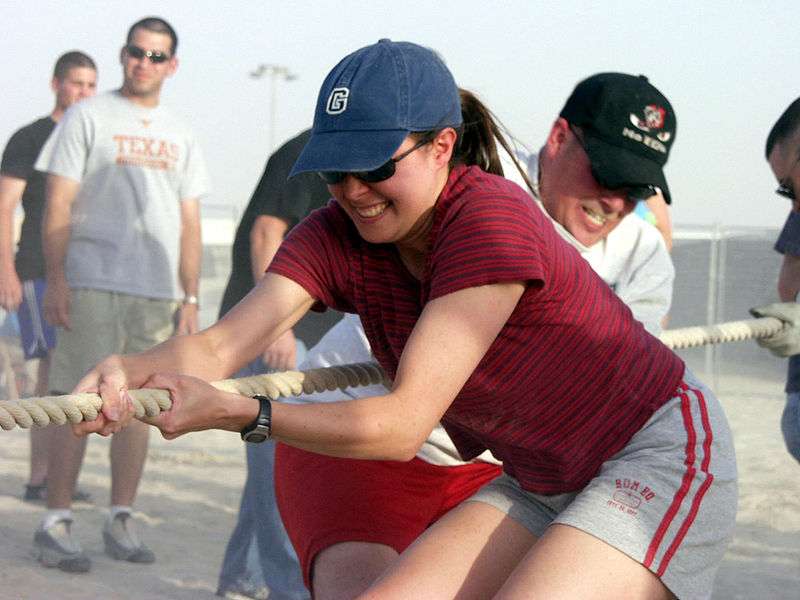
Games of skill include games of physical skill, such as wrestling, tug of war, hopscotch, target shooting, and stake, and games of mental skill such as checkers and chess. Games of strategy include checkers, chess, go, arimaa, and tic-tac-toe, and often require special equipment to play them. Games of chance include gambling games (blackjack, mah-jongg, roulette, etc.), as well as snakes and ladders and rock, paper, scissors; most require equipment such as cards or dice. However, most games contain two or all three of these elements. For example, American football and baseball involve both physical skill and strategy while tiddlywinks, poker, and Monopoly combine strategy and chance. Many card and board games combine all three; most trick-taking games involve mental skill, strategy, and an element of chance, as do many strategic board games such as Risk, Settlers of Catan, and Carcassonne.
- - - - - - - - - - - - - - - - - - - - - - - - - - - - - - - - - - - - - - - - - - - - - - - - - - - - - - - - - - - - - - - - - - - - - - - - - - - - - - - - - - - - - - - - - - - - - - - - - - - - - - -
Lawn Games: • Always popular for outdoor parties, family reunions & planned events
Lawn games are outdoor games that can be played on a lawn; an area of mowed grass (or alternately, on graded soil) generally smaller than a "field" or pitch. Variations of many games that are traditionally played on a pitch are marketed as "lawn games" for home use in a front or back yard. Common lawn games:
• Horseshoes • Sholf • Croquet • Bocce • Bowls • Lawn bowls • Lawn darts • Cornhole • Petanque
• Ladder Golf • Washers • Kan-jam • Flimsee • Stake • Ladder Toss • Mölkky • Egg Rolling • Kubb
• Quoits • Skittles • Cherokee Marbles • Bottledrop • Trucco • Backyard Golf • Shuffleboard • Boules
• Pétanque • Snake Pit • Washer Pitching • Trac Ball •
Tailgating and Lawn games: Traditional Game of CornholeLawn games such as Cornhole, Ladder Golf Polish horse shoes and Sholf are very popular during tailgates and tailgate parties. Lawn games are associated with tailgating primarily because of the simplicity in the game materials. Lawn games carry the connotation of drinking games because of their presence during tailgates.
- - - - - - - - - - - - - - - - - - - - - - - - - - - - - - - - - - - - - - - - - - - - - - - - - - - - - - - - - - - - - - - - - - - - - - - - - - - - - - - - - - - - - - - - - - - - - - - - - - - - - - -
Tabletop Games: see party games
A tabletop game generally refers to any game where the elements of play are confined to a small area and that require little physical exertion, usually simply placing, picking up and moving game pieces. Most of these games are, thus, played at a table around which the players are seated and on which the game's elements are located. A variety of major game types generally fall under the heading of tabletop games. It is worth noting that many games falling into this category, particularly party games, are more free-form in their play and can involve physical activity such as mime, however the basic premise is still that the game does not require a large area in which to play it, large amounts of strength or stamina, or specialized equipment other than what comes in the box (games sometimes require additional materials like pencil and paper that are easy to procure).
• Board games • Card games • Dice games • Miniature games • Paper and pencil games
• Tile-based games (e.g. Mahjong, Dominoes) • Role-playing games •
- - - - - - - - - - - - - - - - - - - - - - - - - - - - - - - - - - - - - - - - - - - - - - - - - - - - - - - - - - - - - - - - - - - - - - - - - - - - - - - - - - - - - - - - - - - - - - - - - - - - - - -
Dexterity/coordination Games:
This class of games includes any game in which the skill element involved relates to manual dexterity or hand-eye coordination, but excludes the class of video games. Games such as jacks, paper football, and Jenga require only very portable or improvised equipment and can be played on any flat level surface, while other examples, such as pinball, billiards, air hockey, foosball, and table hockey require specialized tables or other self-contained modules on which the game is played. The advent of home video game systems largely replaced some of these, such as table hockey, however air hockey, billiards, pinball and foosball remain popular fixtures in private and public game rooms. These games and others, as they require reflexes and coordination, are generally performed more poorly by intoxicated persons but are unlikely to result in injury because of this; as such the games are popular as drinking games. In addition, dedicated drinking games such as quarters also involve physical coordination and are popular for similar reasons.
- - - - - - - - - - - - - - - - - - - - - - - - - - - - - - - - - - - - - - - - - - - - - - - - - - - - - - - - - - - - - - - - - - - - - - - - - - - - - - - - - - - - - - - - - - - - - - - - - - - - - - -
Pencil and Paper Games:
Pencil and paper games require little or no specialized equipment other than writing materials, though some such games have been commercialized as board games (Scrabble, for instance, is based on the idea of a crossword puzzle, and tic-tac-toe sets with a boxed grid and pieces are available commercially). These games vary widely, from games centering on a design being drawn such as Pictionary and "connect-the-dots" games like sprouts, to letter and word games such as Boggle and Scattergories, to solitaire and logic puzzle games such as Sudoku and crossword puzzles.
- - - - - - - - - - - - - - - - - - - - - - - - - - - - - - - - - - - - - - - - - - - - - - - - - - - - - - - - - - - - - - - - - - - - - - - - - - - - - - - - - - - - - - - - - - - - - - - - - - - - - - -
Guessing Game:
A guessing game has as its core a piece of information that one player knows, and the object is to coerce others into guessing that piece of information without actually divulging it in text or spoken word. Charades is probably the most well-known game of this type, and has spawned numerous commercial variants that involve differing rules on the type of communication to be given, such as Catch Phrase, Taboo, Pictionary, and similar. The genre also includes many game shows such as Win, Lose or Draw, Password and $25,000 Pyramid.
- - - - - - - - - - - - - - - - - - - - - - - - - - - - - - - - - - - - - - - - - - - - - - - - - - - - - - - - - - - - - - - - - - - - - - - - - - - - - - - - - - - - - - - - - - - - - - - - - - - - - - -
Business games: • research: Team building
Business games can take a variety of forms, from interactive board games to interactive games involving different props (balls, ropes, hoops, etc.) and different kinds of activities. The purpose of these games is to link to some aspect of organizational performance and to generate discussions about business improvement. Many business games focus on torganizational behaviors. Some of these are computer simulations while others are simple designs for play and debriefing. Team building is a common focus of such activities.
- - - - - - - - - - - - - - - - - - - - - - - - - - - - - - - - - - - - - - - - - - - - - - - - - - - - - - - - - - - - - - - - - - - - - - - - - - - - - - - - - - - - - - - - - - - - - - - - - - - - - - -
Simulation Game:
The term "game" can include simulation or re-enactment of various activities or use in "real life" for various purposes: e.g., training, analysis, prediction. Well-known examples are war games and roleplaying. The root of this meaning may originate in the human prehistory of games deduced by anthropology from observing primitive cultures, in which children's games mimic the activities of adults to a significant degree: hunting, warring, nursing, etc. These kinds of games are preserved in modern times.
- - - - - - - - - - - - - - - - - - - - - - - - - - - - - - - - - - - - - - - - - - - - - - - - - - - - - - - - - - - - - - - - - - - - - - - - - - - - - - - - - - - - - - - - - - - - - - - - - - - - - - -
Outdoor Locating Games:
This category includes a class of games, sports or other recreational activities which take place outdoors and involve some form of navigation to locate a target place or object.
• A scavenger hunt is a game in which the organizers prepare a list defining specific items, using which the participants — individuals or teams — seek to gather all items on the list — usually without purchasing them — or perform tasks or take photographs of the items, as specified. The goal is usually to be the first to complete the list, although in a variation on the game players can also be challenged to complete the tasks on the list in the most creative manner.
• Letterboxing: is an outdoor hobby that combines elements of orienteering, art, and puzzle solving. Letterboxers hide small, weatherproof boxes in publicly-accessible places (like parks) and distribute clues to finding the box in printed catalogs, on one of several web sites, or by word of mouth. Individual letterboxes usually contain a notebook and a rubber stamp. Finders make an imprint of the letterbox's stamp, either on their personal notebook or on a postcard, and leave an impression of their personal stamp on the letterbox's "visitors' book" or "logbook" — as proof of having found the box and letting subsequent letterboxers see who have visited. Many letterboxers keep careful track of their "find count".
- - - - - - - - - - - - - - - - - - - - - - - - - - - - - - - - - - - - - - - - - - - - - - - - - - - - - - - - - - - - - - - - - - - - - - - - - - - - - - - - - - - - - - - - - - - - - - - - - - - - - - -
• Way to many to list them here!
- - - - - - - - - - - - - - - - - - - - - - - - - - - - - - - - - - - - - - - - - - - - - - - - - - - - - - - - - - - - - - - - - - - - - - - - - - - - - - - - - - - - - - - - - - - - - - - - - - - - - - -