- - - - - - - - - - - - - - - - - - - - - - - - - - - - - - - - - - - - - - - - - - - - - - - - - - - - - - - - - - - - - - - - - - - - - - - - - - - - - - - - - - - - - - - - - - - - - - - - - - - - - - - - - - -
Origin of this holiday
Our research did not find the creator, or the origin of this day. We did however find that this holiday has been celebrated for years. There is plenty of documentation to support that this holiday does indeed exist. This is referred to as a "National" day. However, we did not find any congressional records or presidential proclamations for this day. Even though, this is still a holiday to celebrate.
We found recognition about this holiday from:
Calendar sites and personal Internet sites that blog and share information about this holiday.
- - - - - - - - - - - - - - - - - - - - - - - - - - - - - - - - - - - - - - - - - - - - - - - - - - - - - - - - - - - - - - - - - - - - - - - - - - - - - - - - - - - - - - - - - - - - - - - - - - - - - - - - - - -
Now let's learn
Tapioca is a starch extracted from cassava (Manihot esculenta). This species is native to Brazil, Colombia, Venezuela, Cuba, Puerto Rico, Haiti, the Dominican Republic, Honduras, from where the plant was spread by Portuguese and Spanish explorers to Africa, the Philippines and most of the West Indies, being now cultivated worldwide. In India, the term "tapioca" is used to represent the root of the plant (cassava), rather than the starch. In Vietnam, it is called bột năng. In Indonesia, it is called singkong. In the Philippines, it is called sago. In Malaysia it is called "Ubi Kayu".
The name tapioca is derived from the word tipi'óka, the name for this starch in the Tupí language of South America. This Tupí word refers to the process by which the starch is made edible. However, as the word moved out of Brazil it came to refer to similar preparations made with other esculents.
Tapioca is a staple food in some regions and is used worldwide as a thickening agent, mainly in foods. Tapioca is gluten-free, and almost completely protein-free. In Britain, the word tapioca often refers to a milk pudding thickened with arrowroot, while in Asia the sap of the sago palm is often part of its preparation.
United States
While frequently associated with tapioca pudding, a dessert in the
United States, tapioca is also used in other courses. Bubble tea is
gaining popularity in cities with large Asian populations. People on
gluten-free diets can eat bread made with tapioca flour (although
individuals on gluten-free diets do have to be careful, as some tapioca
flour has wheat added to it). Tapioca is also used as an ingredient in
Daiya brand cheese substitute.
Pearl tapioca
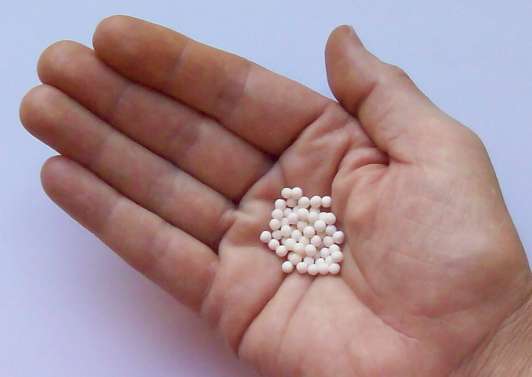
Pearl tapioca is also known as boba to some cultures. It is produced
by passing the moist starch through a sieve under pressure. Pearl
tapioca is a common ingredient in Asian desserts such as kolak, in
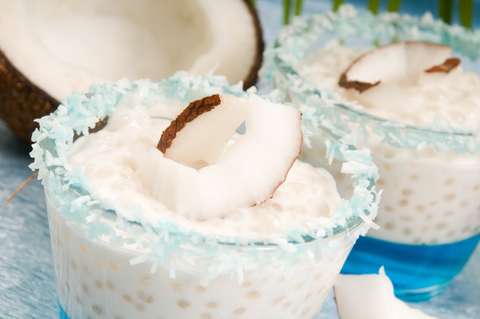
tapioca pudding, and in sweet drinks such as bubble tea, fruit slush
and taho, where they provide a chewy contrast to the sweetness and
texture of the drink. Small pearls are preferred for use in puddings;
large pearls are preferred for use in drinks. These large pearls most
often are brown, not white (and traditionally are used in black or green
tea drinks), but are available in a wide variety of pastel colors. Not
only are they used in the aforementioned drinks, they are also
available as an option in shave ice and hot drinks. In addition to their
use in puddings and beverages, a recent innovation has seen tapioca
pearls baked inside of cakes.
- - - - - - - - - - - - - - - - - - - - - - - - - - - - - - - - - - - - - - - - - - - - - - - - - - - - - - - - - - - - - - - - - - - - - - - - - - - - - - - - - - - - - - - - - - - - - - - - - - - - - - - - - - -
Resources, References & External Links
- - - - - - - - - - - - - - - - - - - - - - - - - - - - - - - - - - - - - - - - - - - - - - - - - - - - - - - - - - - - - - - - - - - - - - - - - - - - - - - - - - - - - - - - - - - - - - - - - - - - - - - - - - -
See Also: