When is National Fresh Florida Tomato Month? Always the month of April!
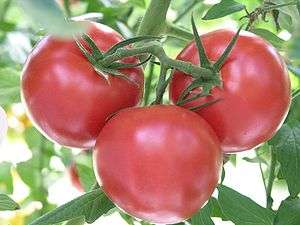
The tomato is considered a vegetable in cooking and are best when vine-ripened until deep red. Most commercially produced tomatoes are picked while still in a green and unyielding state. This is done to reduce damage during transportation and to increase shelf life. Unfortunately, they are often pale and tasteless when sold. Additionally, most commercial breeds are selected for their yield and keeping qualities, instead of for flavour. So even vine-ripened tomatoes can be disappointing.
Tomatoes should be kept at a cool room temperature, never refrigerated. High cooking temperatures quickly destroy fresh tomato flavor, but can be useful to disable enzymes that tend to liquify a tomato that has been injured (sliced, mashed, or shredded, for example).
Tomatoes are rich in vitamins and antioxidants. They contain MSG. The seeds are high in fiber and bitter-tasting tannins. The green parts are mildly poisonous, which is not surprising, as tomatoes are closely related to both nightshade and tobacco.
As its fruit was originally believed to be poisonous when introduced into Europe, the tomato was used solely as an ornamental plant during the 16th and 17th centuries. The first traces of its use as a food there date back to the first half of the 18th century. Only in the second half of the 19th century did widespread cultivation of the tomato as food begin (mainly in southern Italy and in France).
- - - - - - - - - - - - - - - - - - - - - - - - - - - - - - - - - - - - - - - - - - - - - - - - - - - - - - - - - - - - - - - - - - - - - - - - - - - - - - - - - - - - - - - - - -
North America
Because of their longer growing season for this heat-loving crop, several states in the US Sun Belt became major tomato-producers, particularly Florida and California. In California, tomatoes are grown under irrigation for both the fresh fruit market and for canning and processing. The University of California, Davis (UC Davis) became a major center for research on the tomato. The C.M. Rick Tomato Genetics Resource Center at UC Davis is a genebank of wild relatives, monogenic mutants and miscellaneous genetic stocks of tomato. The Center is named for the late Dr. Charles M. Rick, a pioneer in tomato genetics research. Research on processing tomatoes is also conducted by the California Tomato Research Institute in Escalon, California.
- - - - - - - - - - - - - - - - - - - - - - - - - - - - - - - - - - - - - - - - - - - - - - - - - - - - - - - - - - - - - - - - - - - - - - - - - - - - - - - - - - - - - - - - - -
Varieties of tomato
Spherical juice tomatoes, known as rounds
These tomatoes are used for juice production. When sliced into quarters, they go well in salads. When sliced thin, they go well in sandwiches. It is often easy to remove the slimy seedy parts from this type of tomato.
Pear-shaped or oval tomatoes, known as consistency tomatoes or plum tomatoes
These tomatoes are less juicy and flavorful than others. They are primarily used to make tomato paste.
Small cherry or grape tomatoes
These tomatoes are usually eaten whole in salads or as a snack. Grape tomatoes have firmer, thicker flesh, and may be cooked on kabobs or grilled.
Wide steak, beefsteak, or sandwich tomatoes
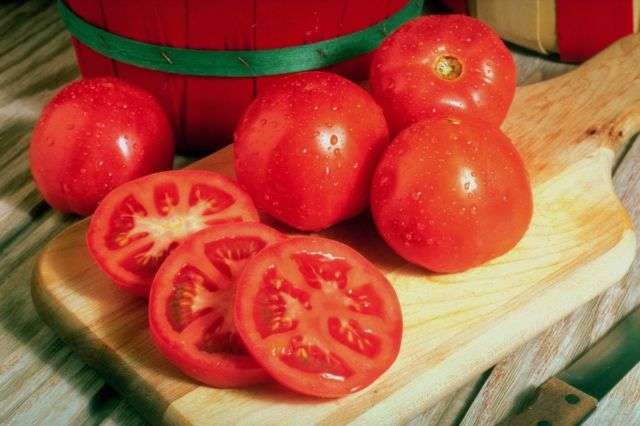
These tomatoes are commonly 5 inches in diameter. One slice is enough to cover a large sandwich. It is usually very difficult to remove the slimy seedy parts from this type of tomato.
- - - - - - - - - - - - - - - - - - - - - - - - - - - - - - - - - - - - - - - - - - - - - - - - - - - - - - - - - - - - - - - - - - - - - - - - - - - - - - - - - - - - - - - - - -
Tinned or canned tomatoes
Don't despise the tinned product. In the summer, tomato growers produce many more tomatoes than they can possibly sell fresh. Lots of these (usually plum tomatoes) are put into cans. For cooked in the middle of winter, you might get a better tasting tomato from a tin than from a low-cost greenhouse-grown or imported variety.
- - - - - - - - - - - - - - - - - - - - - - - - - - - - - - - - - - - - - - - - - - - - - - - - - - - - - - - - - - - - - - - - - - - - - - - - - - - - - - - - - - - - - - - - - -
Sun-dried tomatoes
Tomatoes can also be preserved by being dried in the sun (this tends to happen more in Italy than in England, for example). They are then either stored dry in packs (they need to be soaked before use) or in olive oil in jars (these can be used straight from the jar). The taste of sun-dried tomatoes is intense and concentrated. You can use them in pizza topping, where they go well with strong flavours like anchovies, capers and olives.
- - - - - - - - - - - - - - - - - - - - - - - - - - - - - - - - - - - - - - - - - - - - - - - - - - - - - - - - - - - - - - - - - - - - - - - - - - - - - - - - - - - - - - - - - -
Peeling tomatoes
It's almost always a good idea to skin tomatoes before using them in cooking. Here's how.
Using a sharp knife, cut a little cross at the base of each tomato. Plunge the tomatoes into boiling water for no more than 30 seconds, then plunge them into ice cold water, to stop any cooking that might have started. You should then be able to pull off the skin from each tomato. Throw the skins away — they aren't much good for preparing any foods, although if you like to eat them, they do contain many nutrients.
- - - - - - - - - - - - - - - - - - - - - - - - - - - - - - - - - - - - - - - - - - - - - - - - - - - - - - - - - - - - - - - - - - - - - - - - - - - - - - - - - - - - - - - - - -
Culinary uses
• Pa amb tomàquet
• Suquet de peix (Catalan cuisine)Barbecue sauces
• Bloody Mary
• Fried green tomatoes (food)
• Gazpacho (Andalusian cuisine)
• Ketchup
• Pa amb tomàquet (Catalan cuisine)
• Salsa
• Tomato juice
• Tomato paste
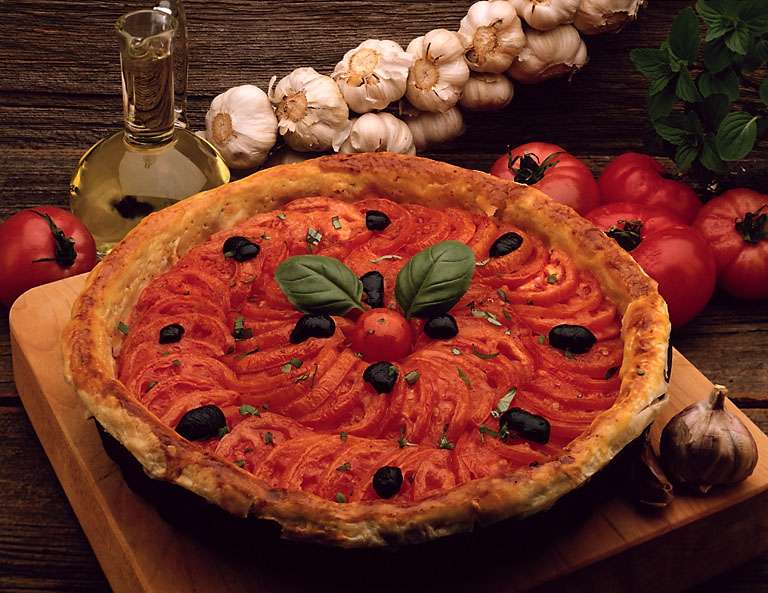
• Tomato pie
• Tomato purée
• Tomato sauce (common in Italian cuisine)
• Tomato soup
Recipes using tomatoes as a significant ingredient
• Burrito
• Fresh Broadbeans Salad
• Garlic, Tomato and Cheddar Sandwich
• Hamburger
• Jambalaya
• Clam Chowder
• Six Layer Casserole
• Sprout Salad
• Taco
• Tomato Curry
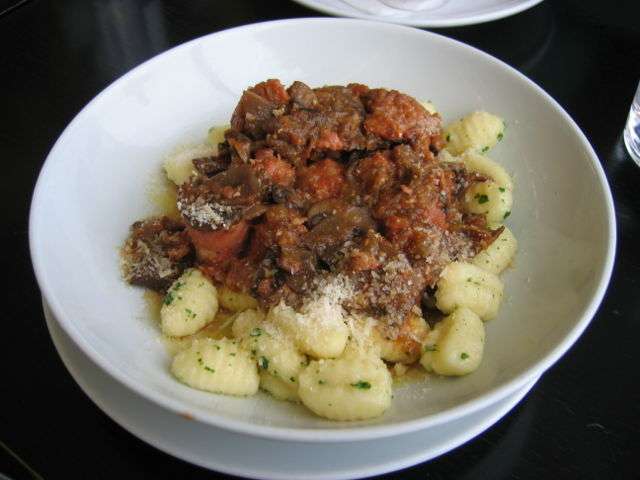
• Tomato Pasta
• Tomato Salad
• Vegetarian Soft Tacos
- - - - - - - - - - - - - - - - - - - - - - - - - - - - - - - - - - - - - - - - - - - - - - - - - - - - - - - - - - - - - - - - - - - - - - - - - - - - - - - - - - - - - - - - - -
External Links
Related How To Articles
•
•
Garden Related
- - - - - - - - - - - - - - - - - - - - - - - - - - - - - - - - - - - - - - - - - - - - - - - - - - - - - - - - - - - - - - - - - - - - - - - - - - - - - - - - - - - - - - - - - -
Resources: This article is licensed under the GNU Free Documentation License. It uses some material from Wikipedia/article tomato / and other related pages. Top Photo: homestead stock