Holidays and observances
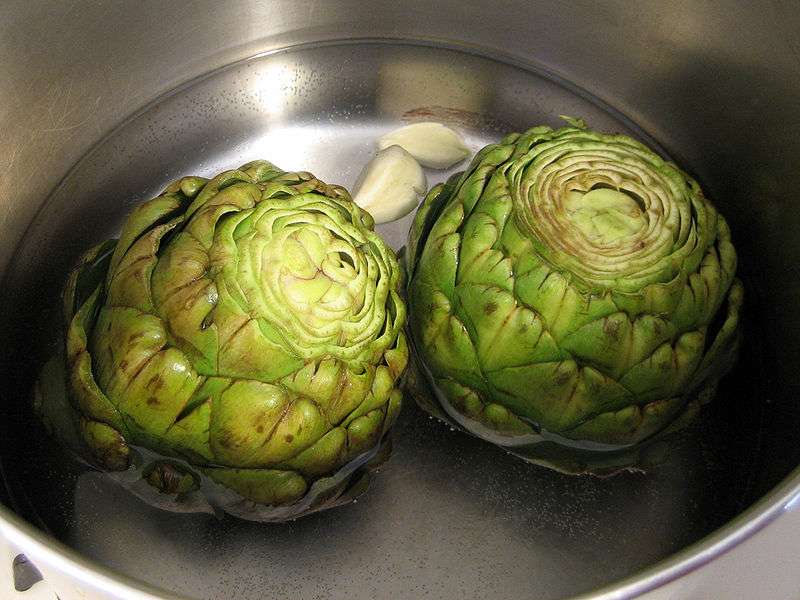
are purple. The edible portion of the buds consists primarily of the fleshy lower portions of the involucral bracts and the base, known as the "heart"; the mass of immature florets in the center of the bud is called the "choke". These are inedible in older larger flowers.
This diuretic vegetable is of much nutritional value because of its exhibiting aid to digestion, strengthening of the liver function, gall bladder function, and lowering of HDL/LDL ratio. This reduces cholesterol levels, which diminishes the risk for arteriosclerosis and coronary heart disease.
Aqueous extracts from artichoke leaves have also shown to reduce cholesterol by inhibiting HMG-CoA reductase and having a hypolipidemic influence, lowering blood cholesterol.
- - - - - - - - - - - - - - - - - - - - - - - - - - - - - - - - - - - - - - - - - - - - - - - - - - - - - - - - - - - - - - - - - - - - -
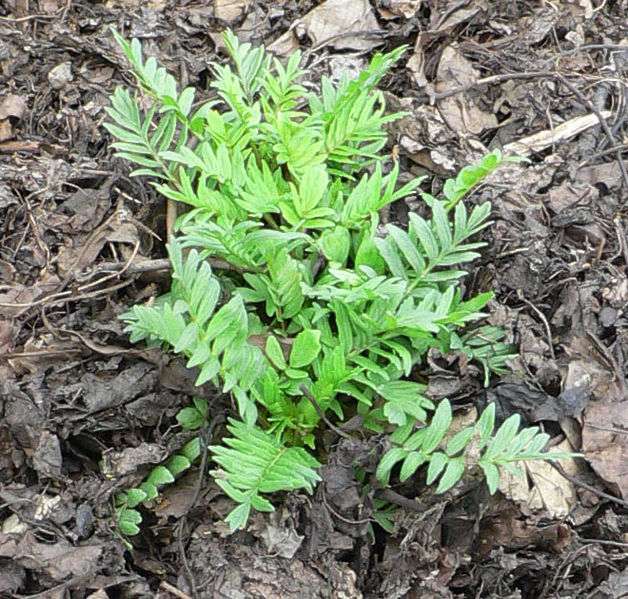
Other names used for this plant include garden valerian (to distinguish it from other Valeriana species), garden heliotrope (although not related to Heliotropium) and all-heal. The garden flower red valerian is also sometimes referred to as "valerian" but is a different species, from the same family but not particularly closely related.
History: "Valerian has been used as a medicinal herb since at least the time of ancient Greece and Rome. Hippocrates described its properties, and Galen later prescribed it as a remedy for insomnia. In medieval Sweden, it was sometimes placed in the wedding clothes of the groom to ward off the "envy" of the elves. Valerian can be consumed as a tea."
- - - - - - - - - - - - - - - - - - - - - - - - - - - - - - - - - - - - - - - - - - - - - - - - - - - - - - - - - - - - - - - - - - - - -
Christian Feast Days - (March 16)
Abbán
Agapitus
Heribert of Cologne
- - - - - - - - - - - - - - - - - - - - - - - - - - - - - - - - - - - - - - - - - - - - - - - - - - - - - - - - - - - - - - - - - - - - -
Latvian Legion Day (Latvia) - (March 16)
Latvian Legion Day ("Latviešu leģiona atceres diena" - "Latvian Legion remembrance day" in Latvian) is a day on March 16, when front soldiers of the Latvian Legion, part of the Waffen SS, are commemorated.
- - - - - - - - - - - - - - - - - - - - - - - - - - - - - - - - - - - - - - - - - - - - - - - - - - - - - - - - - - - - - - - - - - - - -
Saint Urho's Day (Finnish community in U.S. and Canada) - (March 16)
"The legend of St. Urho was the invention of a Finnish-American named Richard Mattson, who worked at Ketola's Department Store in Virginia, Minnesota in spring of 1956. Mattson later recounted that he invented St. Urho when he was questioned by coworker Gene McCavic about the Finns' lack of a saint like the Irish St. Patrick, whose feat of casting the snakes out of Ireland is remembered on St. Patrick's Day. In fact, the patron saint of Finland is Henry (Bishop of Finland).
According to the original "Ode to St. Urho" written by Gene McCavic and Richard Mattson, St. Urho was supposed to have cast "tose 'Rogs" (those frogs) out of Finland by the power of his loud voice, which he obtained by drinking "feelia sour" (sour whole milk) and eating "kala mojakka" (fish soup).
The original "Ode to St. Urho" identified St. Urho's Day as taking place on May 24. Later the date was changed to March 16, the day before St. Patrick's Day. St. Urho's feast is supposed to be celebrated by wearing the colors Royal Purple and Nile Green. Other details of the invented legend also changed, apparently under the influence of Dr. Sulo Havumäki, a psychology professor at Bemidji State College in Bemidji, Minnesota. The legend now states that St. Urho drove away grasshoppers (rather than frogs) from Finland using the incantation "Heinäsirkka, heinäsirkka, mene täältä hiiteen!" ("Grasshopper, grasshopper, go from hence to Hell!"), thus saving the Finnish grape crops..........
- - - - - - - - - - - - - - - - - - - - - - - - - - - - - - - - - - - - - - - - - - - - - - - - - - - - - - - - - - - - - - - - - - - - -
The first day of the Bacchanalia (Roman Empire) - (March 16)
The bacchanalia were wild and mystic festivals of the Roman god Bacchus (or Dionysus). It has since come to describe any form of drunken revelry.
- - - - - - - - - - - - - - - - - - - - - - - - - - - - - - - - - - - - - - - - - - - - - - - - - - - - - - - - - - - - - - - - - - - - -Significant March
• Moon Name is Crow Moon, Lenten Moon, Sap Moon, Seed
- - - - - - - - - - - - - - - - - - - - - - - - - - - - - - - - - - - - - - - - - - - - - - - - - - - - - - - - - - - - - - - - - - - - - - - - - - - - - - - - - - - - - - - - - - - - - - - - - - - - - - - -
References
1. Merriam-Webster Dictionary,
2.