- - - - - - - - - - - - - - - - - - - - - - - - - - - - - - - - - - - - - - - - - - - - - - - - - - - - - - - - - - - - - - - - - - - - - - - - - - - - - - - - - - - - - - - - - - - - - - - - - - - - - - - - - - -
The milk in bubble tea is optional:
The milk in bubble tea is optional, though many tea houses use it. Some cafes use a non-dairy creamer milk substitute instead of milk because many East Asians are lactose intolerant and because it is cheaper and easier to store and use than perishable milk. In Western countries, soy milk options are widely available for those who avoid dairy products. This adds a distinct flavor and consistency to the drink.
Different flavorings can be added to bubble tea.
Some widely available fruit flavors include strawberry, green apple, passion fruit, mango, lemon, watermelon, grape, lychee, peach, pineapple, cantaloupe, honeydew, banana, avocado, coconut, kiwi, and jackfruit. Other popular non-fruit flavors include taro, pudding, chocolate, coffee, mocha, barley, sesame, almond, ginger, lavender, rose, caramel and violet. Some of the sour fruit flavors are available in bubble tea without milk only as the acidity tends to curdle the milk.
Other varieties of the bubble tea drink can include blended drinks.
Many stores in the U.S. provide a list of choices to choose from. Some may include coffee-blended drinks, or even smoothies.
Tapioca balls are the prevailing chewy tidbit in bubble tea,
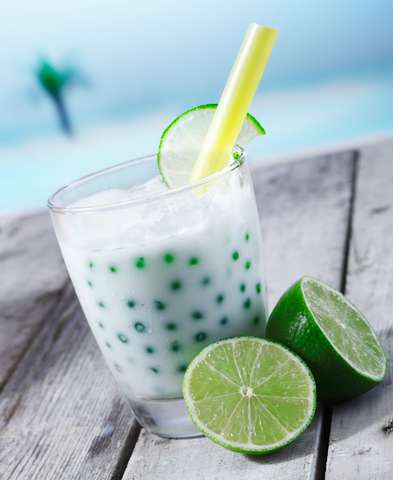
but a wide range of other options can be used to add similar texture to the drink. Green pearls have a small hint of green tea flavor, and are chewier than the traditional tapioca balls. Jelly is also used in small cubes, stars, or rectangular strips, with flavors such as coconut jelly, konjac, lychee, grass, mango, and green tea often available at some shops. Rainbow, a fruit mix of konjac, has a pliant, almost crispy consistency. Azuki bean or mung bean paste, also typical toppings for Taiwanese shaved ice desserts, give the drinks an added subtle flavor, as well as texture. Aloe, egg pudding (custard pudding), sago, and taro balls can also be found in most tea houses, to complete the perfect cup of tea.
Due to its popularity, single-serving packets of black tea (with powdered milk and sugar included) are available as "Instant Boba Milk Tea" in some places.
Bubble tea cafés will also frequently serve drinks without coffee or tea in them.
The base for these drinks is flavoring blended with ice, often called Snow Bubble. All mix-ins that can be added to the bubble tea can also be added to these slushie-like drinks. One drawback to them is that the coldness of the iced drink may cause the tapioca balls to harden, making them difficult to suck up through a straw and chew. To prevent this from happening, these slushies must be consumed more quickly than bubble tea.
See Also:
- - - - - - - - - - - - - - - - - - - - - - - - - - - - - - - - - - - - - - - - - - - - - - - - - - - - - - - - - - - - - - - - - - - - - - - - - - - - - - - - - - - - - - - - - - - - - - - - - - - - - - - - - - -
Resources & References
It uses some material from Wikipedia/article © / and other related pages.
External Links
- - - - - - - - - - - - - - - - - - - - - - - - - - - - - - - - - - - - - - - - - - - - - - - - - - - - - - - - - - - - - - - - - - - - - - - - - - - - - - - - - - - - - - - - - - - - - - - - - - - - - - - - - - -
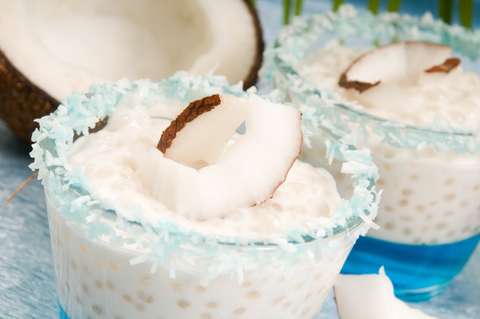
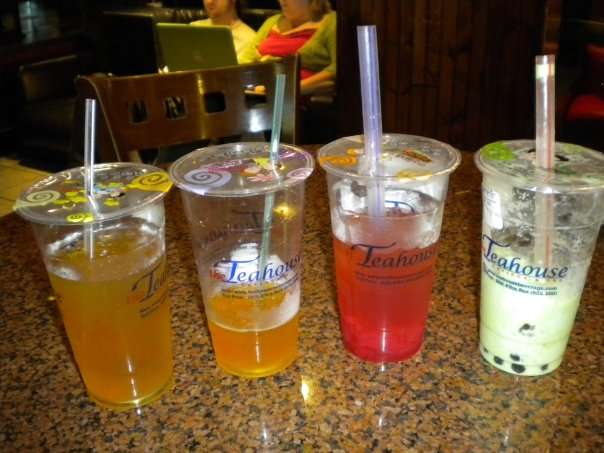
Pictured above:
Four different Bubble Teas: mango green tea, lychee green tea, strawberry green tea with strawberry jelly, and a coconut cream blend with tapioca.
The most common black tea varieties are
Oolong and Earl Grey, while jasmine green tea is a mainstay at almost all tea houses. Another variation called yuanyuang (鴛鴦, named after the Mandarin duck) originated in Hong Kong and consists of half black tea and half coffee. Decaffeinated versions of teas are sometimes available when the tea house brews fresh the tea base.