What is the wearing of the green? -
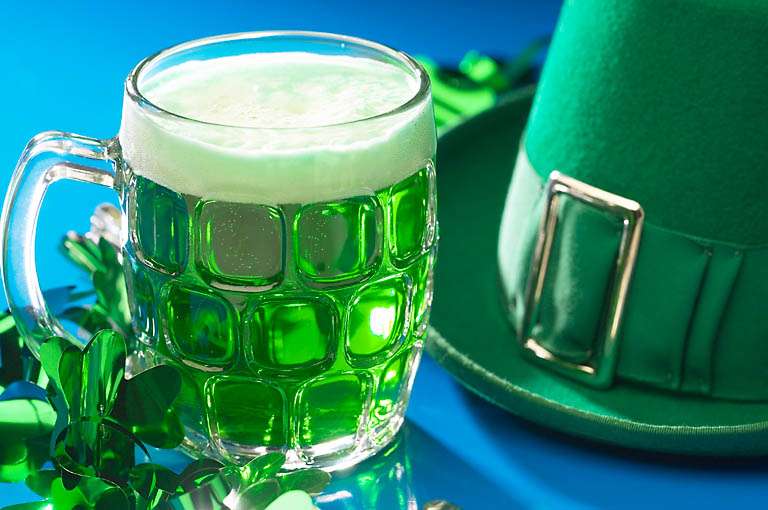
St. Patrick's Blue, not green, was the colour long-associated with St. Patrick. Green, the colour most widely associated with Ireland, with Irish people, and with St. Patrick's Day in modern times, may have gained its prominence through the phrase "the wearing of the green" meaning to wear a shamrock on one's clothing. At many times in Irish history, to do so was seen as a sign of Irish nationalism or loyalty to the Roman Catholic faith. St. Patrick used the shamrock, a three-leaved plant, to explain the Holy Trinity to the pre-Christian Irish. The wearing of and display of shamrocks and shamrock-inspired designs have become a ubiquitous feature of the saint's holiday. The change to Ireland's association with green rather than blue probably began around the 1750s.
The Shamrock:
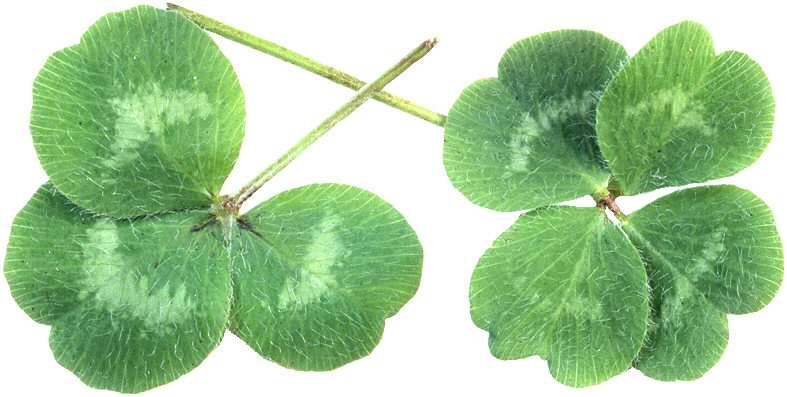
The shamrock is a symbol of Ireland. It is a three-leafed old white clover. It is sometimes of the variety Trifolium repens (a white clover, known in Irish as seamair bhán) but today usually Trifolium dubium (a lesser clover, Irish: seamair bhuí).
The diminutive version of the Irish word for "clover" ("seamair") is "seamróg", which was anglicised as "shamrock", representing a close approximation of the original Irish pronunciation. However, other three-leafed plants — such as black medic (Medicago lupulina), red clover (Trifolium pratense), and wood-sorrels (genus Oxalis) — are sometimes designated as shamrocks. The shamrock was traditionally used for its medical properties and was a popular motif in Victorian times. It is also a common way to represent Saint Patrick's Day. Shamrocks are said to bring good luck.
Badge of Ireland
The shamrock has been registered as a trademark by the Government of Ireland. In Northern Ireland, it is also used by the Northern Ireland Tourist Board.
St. Patrick's Day green: -
Green, the colour most widely associated with Ireland, with Irish people, and with St. Patrick's Day in modern times, may have gained its prominence through the phrase "the wearing of the green" meaning to wear a shamrock on one's clothing. At many times in Irish history, to do so was seen as a sign of Irish nationalism or loyalty to the Roman Catholic faith. According to legend, St. Patrick used the shamrock, a three-leaved plant, to explain the Holy Trinity to the pre-Christian Irish. The change to Ireland's association with green rather than blue probably began around the 1750s.
The Four-Leaf Clover:
The four-leaf clover is an uncommon variation of the common, three-leaved, clover. According to tradition, such leaves bring good luck to their finders, especially if found accidentally. According to legend, each leaflet represents something: the first is for hope, the second is for faith, the third is for love, and the fourth is for luck. Another Irish legend tells that the three leaf clover, or "Shamrock", was what Saint Patrick used to represent the Holy Trinity. The name "four-leaf clover" is a misnomer: the clover leaf actually consists of three (or in this case, four) leaflets. Clovers can have more than four leaflets: the most ever recorded is twenty-one, a record set in June 2008 by the same man who held the prior record and the current Guinness World Record of eighteen Unofficial claims of discovery have ranged as high as twenty-seven. wikipedia
_____________________________________________________________________
See also:
External Links:
Official St. Patrick's Festival in Dublin, Ireland / / /
_____________________________________________________________________
Resource Links:
The Color for March is GREEN
Green is the national color of Ireland and is strongly associated with that country. Green also has close associations with Islam. Because of all the green in nature the color is reminiscent of Spring. Green is life.
Abundant in nature, green signifies growth, renewal, health, and environment.
The Meaning of the Color Green - growth, health, environment, harmony.