What is this Holiday for?
"Black Friday is the Friday after Thanksgiving in the United States, where it is the beginning of the traditional Christmas shopping season. Since Thanksgiving falls on the fourth Thursday in November in the United States, Black Friday may be as early as the 23rd and as late as the 29th of November. Black Friday is not an official holiday, but many employers give the day off, increasing the number of potential shoppers. Retailers often decorate for the Christmas season weeks beforehand. Many retailers open very early (typically 5 am or even earlier) and offer doorbuster deals and loss leaders to draw people to their stores. Although Black Friday, as the first shopping day after Thanksgiving, has served as the unofficial beginning of the Christmas season at least since the start of the modern Macy's Thanksgiving Day Parade in 1924, the term "Black Friday" has been traced back only to the 1960s. The term "Black Friday" originated in Philadelphia in reference to the heavy traffic on that day. More recently, merchants and the media have used it instead to refer to the beginning of the period in which retailers are in the black (i.e., turning a profit)."
"The news media frequently refer to Black Friday as the busiest retail shopping day of the year, but this is not always accurate. While it has been one of the busiest days in terms of customer traffic, in terms of actual sales volume, from 1993 through 2001 Black Friday was usually the fifth to tenth busiest day. In 2002 and 2004, however, Black Friday ranked second place. The busiest retail shopping day of the year in the United States (in terms of both sales and customer traffic) usually has been the Saturday before Christmas. In 2003 and 2005, however, Black Friday actually did reach first place."
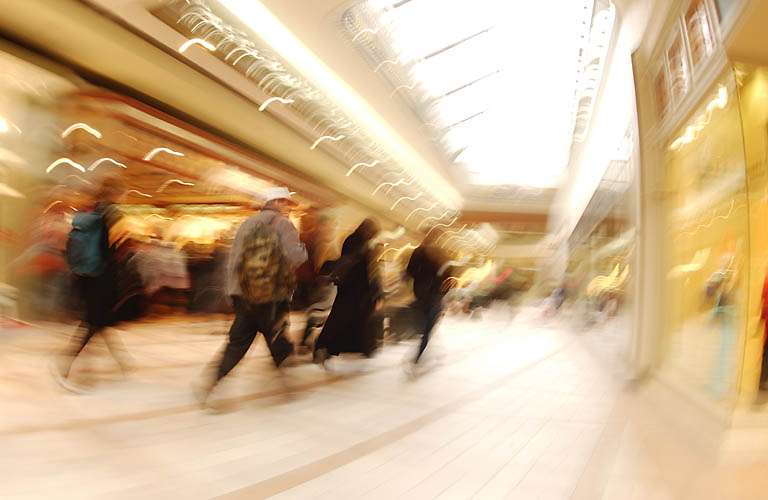
"In many cities it is not uncommon to see shoppers lined up hours before stores with big sales open. Once inside, the stores shoppers often rush and grab, as many stores have only a few of the big draw items. Electronics and popular toys are often the most sought-after items and may be sharply discounted. Because of the shoulder-to-shoulder crowds, many choose to stay home and avoid the hectic shopping experience. The local media often will cover the event, mentioning how early the shoppers began lining up at various stores and providing video of the shoppers standing in line and later leaving with their purchased items. Traditionally Black Friday sales were intended for those shopping for Christmas gifts. For some particularly popular items, some people shop at these sales in order to get deep discounts on items they can then resell, typically online."
____________________________________________________________________________
What type of holiday is this?
Black Friday is not an official holiday.
____________________________________________________________________________
Origin of this Holiday?
"The history of the day after Thanksgiving being the official start of the holiday shopping season is linked together strongly with the idea of Santa Claus parades. They are merged with a parade celebrating Thanksgiving. These parades, though mainly a celebration of thanksgiving, include an appearance by Santa at the end with the idea that 'Santa has arrived' or 'Santa is just around the corner'."
"In the late 19th century and early 20th century, many Santa parades / Thanksgiving day parades were sponsored by department stores. These include the Toronto Santa Claus Parade sponsored by Eaton's and the Macy's Thanksgiving Day Parade sponsored by Macy's. Department stores would use the parades to launch a big advertising push. Eventually it just became an unwritten rule that no store would try doing Christmas advertising before the parade was over. Therefore, the day after Thanksgiving became the day when the shopping season officially started."
"Later on, the fact that this marked the official start of the shopping season led to controversy. In 1939, America was suffering through the great depression. Retail shops would have liked to have a longer shopping season, but no store wanted to break with tradition and be the one to start advertising before Thanksgiving. President Roosevelt moved the date for Thanksgiving up a week leading to much anger by the public who wound up having to change holiday plans. Folks started referring to the change as Franksgiving."
_____________________________________________________________________________
See Also:
Resources: