- - - - - - - - - - - - - - - - - - - - - - - - - - - - - - - - - - - - - - - - - - - - - - - - - - - - - - - - - - - - - - - - - - - - - - - - - - - - - - - - - - - - - - - - - - - - - - - - - - - - - - - - - - -
Recipe:
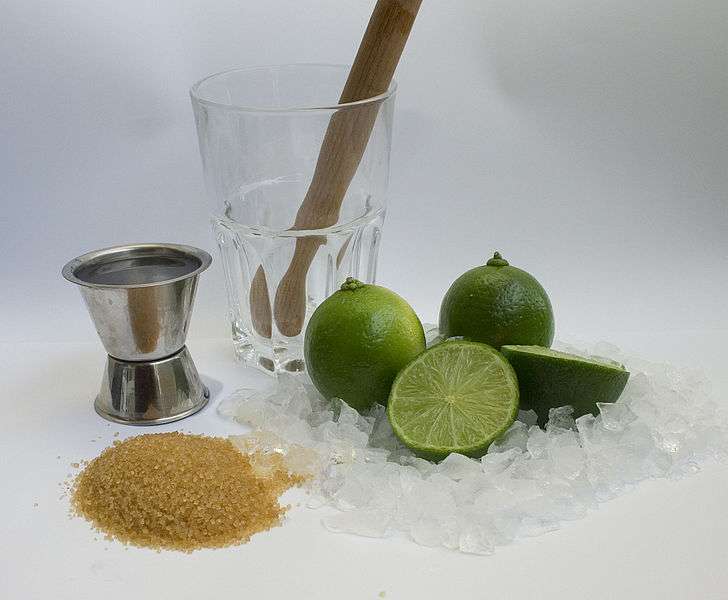
- wash and squeeze with a pestle in a glass of the juice from the pieces.
- 2 teaspoons brown sugar (or alternatively 2 cl sugar syrup)
- Fill the glass with crushed ice and garnish as desired.
- - - - - - - - - - - - - - - - - - - - - - - - - - - - - - - - - - - - - - - - - - - - - - - - - - - - - - - - - - - - - - - - - - - - - - - - - - - - - - - - - - - - - - - - - - - - - - - - - - - - - - - - - -
This article is in honor of....
- - - - - - - - - - - - - - - - - - - - - - - - - - - - - - - - - - - - - - - - - - - - - - - - - - - - - - - - - - - - - - - - - - - - - - - - - - - - - - - - - - - - - - - - - - - - - - - - - - - - - - - - - -
Popularity
The caipirinha is the national cocktail of Brazil, and is enjoyed in restaurants, bars, and many households throughout the country. Once almost unknown outside Brazil, the drink has become more popular and more widely available in recent years, in large part due to the rising availability of first-rate brands of cachaça outside Brazil. The International Bartenders Association has designated it as one of their Official Cocktails.
Name
The word caipirinha is the diminutive version of the word caipira, which refers to someone from the countryside, being an almost exact equivalent of the American English hillbilly or the Lowland Scots teuchter. The word may be used as either a masculine or a feminine noun, but when referring to this drink it is only feminine (usage of diminutives is common in Brazil). In the Brazilian vocabulary, the word caipirinha is mostly associated with the drink itself rather than the class of person.
Variations
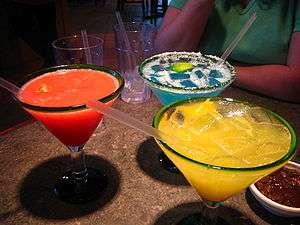
- The term caipirinha is sometimes used to describe any cachaça-and-fruit-juice drink (e.g. a passionfruit caipirinha, kiwi caipirinha or strawberry caipirinha).
- Caipifruta is a very popular caipirinha drink in Brazil, consisting of cachaça, crushed fresh fruits (either singly or in combination), and crushed ice. The most popular fresh fruits used to create caipifrutas are tangerine, lime, kiwi fruit, passion fruit, pineapple, lemon, grapes, mango, cajá, and caju (cashew fruit).
- Caipisake (made with sake instead of cachaça) is also becoming increasingly popular, most commonly made with strawberries or kiwi.
Derivations
There are many derivations of caipirinha in which other spirits substitute for cachaça. The most well known include:
- The Caipivodka (also known as Caipiroska, Caipiroshka or Caipirovka), in which vodka substitutes for cachaça.
- The Caipiroska Negra, Black Caipiroshka or Caipiblack is made with black vodka instead of cachaça.
- Caipiríssima is a caipirinha made with rum instead of cachaça; the word was coined for an advertisement for a popular rum brand in the late '70s.
- Caipifruta is a variation made with cachaça and other fruits instead of lime, typically found in tourist areas.
- CaipirItaly is a variation from Italy. It's made using Campari instead of cachaça.
- Sakeirinha or Caipisakê is a version made with sake.
- Caipinheger is another variation made using Steinhäger.
- Morangoska is a Portuguese variation made using strawberries instead of lime.
- Caipirão is another Portuguese variation made using Licor Beirão instead of cachaça. Beirão liquor is very sweet, so no sugar is used.
- - - - - - - - - - - - - - - - - - - - - - - - - - - - - - - - - - - - - - - - - - - - - - - - - - - - - - - - - - - - - - - - - - - - - - - - - - - - - - - - - - - - - - - - - - - - - - - - - - - - - - - - - -
What is Cachaca?
Cachaça (Portuguese pronunciation: [kaˈʃasɐ]) or "Ca-SHAH-sa" is a liquor made from fermented sugarcane juice.
It is the most popular distilled alcoholic beverage in Brazil. It is also known as aguardente, pinga, caninha and many other names.
Cachaça is mostly produced in Brazil, where, according to 2007 figures, 1.5 billion litres (390 million gallons) are consumed annually, compared with 15 million litres (4.0 million gallons) outside the country. It is typically between 38% and 48% alcohol by volume. When it is homemade it can be as strong as the distiller wants. Up to six grams per litre of sugar may be added." The major difference between cachaça and rum is that rum is usually made from molasses, a by-product from refineries that boil the cane juice to extract as much sugar crystal as possible, while cachaça is made from fresh sugarcane juice that is fermented and distilled. As some rums are also made by this process, cachaça is also known as Brazilian rum.
In the beginning of the seventeenth century, the producers of sugar in various European colonies in America started to use the by-products of sugar, molasses and scummings, as the raw material for the alcoholic beverage which in British colonies was named rum, in France's tafia, in Spain's aguardiente de caña and in the Portuguese (Brazil) aguardente da terra, aguardente de cana and later cachaça.
Figures from 2003 indicate 1.3 billion litres of cachaça are produced each year though only 1% of this production is exported (mainly to Germany). Outside Brazil, cachaça is used almost exclusively as an ingredient in tropical drinks, with the caipirinha being the most famous cocktail. wikipedia
- - - - - - - - - - - - - - - - - - - - - - - - - - - - - - - - - - - - - - - - - - - - - - - - - - - - - - - - - - - - - - - - - - - - - - - - - - - - - - - - - - - - - - - - - - - - - - - - - - - - - - - - - -
You may also want to research
- Daiquiri - similar Cuban cocktail
- Ti'Punch - similar French Caribbean cocktail
References and notes
- - - - - - - - - - - - - - - - - - - - - - - - - - - - - - - - - - - - - - - - - - - - - - - - - - - - - - - - - - - - - - - - - - - - - - - - - - - - - - - - - - - - - - - - - - - - - - - - - - - - - - - - - -
More Articles:
- - - - - - - - - - - - - - - - - - - - - - - - - - - - - - - - - - - - - - - - - - - - - - - - - - - - - - - - - - - - - - - - - - - - - - - - - - - - - - - - - - - - - - - - - - - - - - - - - - - - - - - - - - -
- - - - - - - - - - - - - - - - - - - - - - - - - - - - - - - - - - - - - - - - - - - - - - - - - - - - - - - - - - - - - - - - - - - - - - - - - - - - - - - - - - - - - - - - - - - - - - - - - - - - - - - - - - -