The Perseid meteor shower is
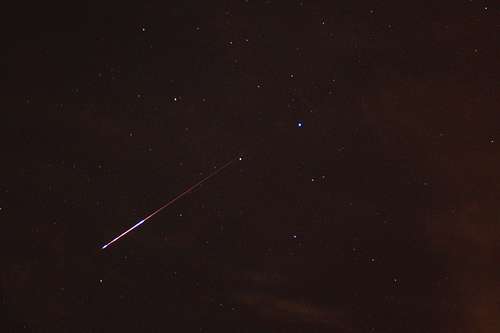
at its peak during mid-August. In the US, it peaks on the night of August 12, 2011 and into the early morning of August 13.[1] During a peak, at least 50-60 meteors can be observed during each hour. In 2011, however, the light of the full moon will likely obscure all but 20-30 meteors per hour.[1] Considered the best and brightest meteor show of the year by many, it's a great opportunity to go outside and check out nature's own dramatic show.
- - - - - - - - - - - - - - - - - - - - - - - - - - - - - - - - - - - - - - - - - - - - - - - - - - - -
Steps
1.) Set your alarm clock:
Go out to watch at or after midnight. The pre-dawn hours are usually the best for viewing because the Earth's side facing the sun picks up more meteors.[2]
- - - - - - - - - - - - - - - - - - - - - - - - - - - - - - - - - - - - - - - - - - - - - - - - - - - -
2.) Pack:
Pack a blanket, compass, bug spray, and snacks. Mittens or gloves and a warm hat are also a good idea for those who feel the cold at night.
• Bring a reclining chair if you don't fancy lying on the ground or holding your head tilted back all night.
- - - - - - - - - - - - - - - - - - - - - - - - - - - - - - - - - - - - - - - - - - - - - - - - - - - -
3.) Find a spot:
Find a spot away from city lights. Planning a camping trip at this time is a great option.
- - - - - - - - - - - - - - - - - - - - - - - - - - - - - - - - - - - - - - - - - - - - - - - - - - - -
4.) Look towards the northeastern sky:
Look towards the northeastern sky using your compass. The meteors can be seen using the naked eye.
• For closer views, use binoculars or a camera with a telescopic lens. You don't have to use these to appreciate the meteors, however, and these can obscure your view if you don't know where to look.[3]
- - - - - - - - - - - - - - - - - - - - - - - - - - - - - - - - - - - - - - - - - - - - - - - - - - - -
5.) Look for the constellation:
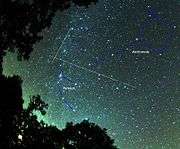
Look for the constellation Perseus. The stars of Perseus form somewhat of a "Y" or "V" shape and the meteors will seem to shoot outwards from a central point in this constellation. They will be visible, however, all over the sky.
- - - - - - - - - - - - - - - - - - - - - - - - - - - - - - - - - - - - - - - - - - - - - - - - - - - -
6.) If you want to take photographs:
If you want to take photographs, bring along a tripod. The tripod is important to prevent any camera movement when you take the photos.
• Put the camera focus on "infinity" and use an open shutter over a period of minutes if your camera can do this.
- - - - - - - - - - - - - - - - - - - - - - - - - - - - - - - - - - - - - - - - - - - - - - - - - - - -
Video:
- - - - - - - - - - - - - - - - - - - - - - - - - - - - - - - - - - - - - - - - - - - - - - - - - - - -
Tips:
• This is best seen from the Northern hemisphere owing to the way that the Earth hits the debris cloud.
- - - - - - - - - - - - - - - - - - - - - - - - - - - - - - - - - - - - - - - - - - - - - - - - - - - -
Things you'll need:
• Compass
• Bug spray
• Blanket, warm clothes
• Snacks
- - - - - - - - - - - - - - - - - - - - - - - - - - - - - - - - - - - - - - - - - - - - - - - - - - - -
Related:
•
•
- - - - - - - - - - - - - - - - - - - - - - - - - - - - - - - - - - - - - - - - - - - - - - - - - - - -
- - - - - - - - - - - - - - - - - - - - - - - - - - - - - - - - - - - - - - - - - - - - - - - - - - - -
- - - - - - - - - - - - - - - - - - - - - - - - - - - - - - - - - - - - - - - - - - - - - - - - - - - -
Other August Categories
- - - - - - - - - - - - - - - - - - - - - - - - - - - - - - - - - - - - - - - - - - - - - - - - - - - -
- - - - - - - - - - - - - - - - - - - - - - - - - - - - - - - - - - - - - - - - - - - - - - - - - - - -
August Beginnings & Endings:
• Dog days end on August 11. This period is traditionally the 40 days beginning July 3 and ending August 11.
•
- - - - - - - - - - - - - - - - - - - - - - - - - - - - - - - - - - - - - - - - - - - - - - - - - - - -
- - - - - - - - - - - - - - - - - - - - - - - - - - - - - - - - - - - - - - - - - - - - - - - - - - - -