When is this holiday celebrated?
This holiday is celebrated annually in December every year.
Night of December 24 or
Northern Hemisphere: circa December 21
Southern Hemisphere: circa June 21
__________________________________________________________
What is this holiday about?
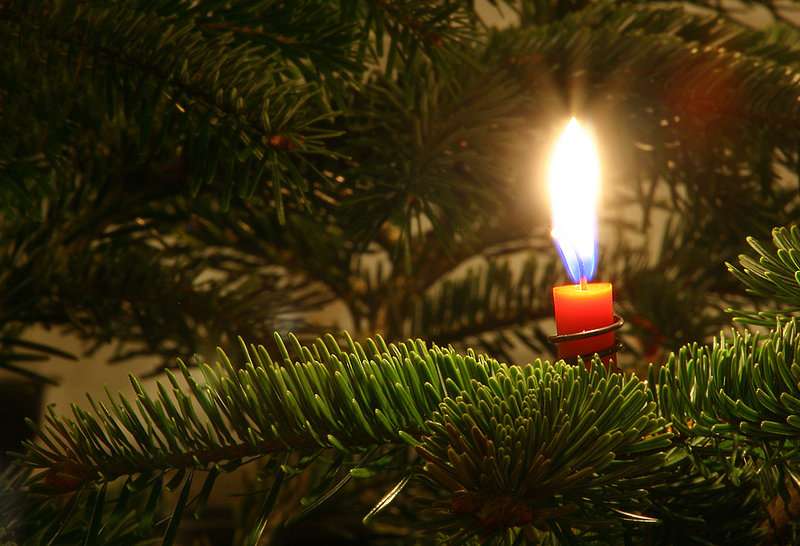
Yule is a winter festival historically celebrated primarily in Northern Europe but now celebrated in many other countries in various forms. Yule celebrations often coincide with Winter Solstice. Modern Yule traditions include decorating a fir or spruce tree, burning a Yule log, hanging mistletoe and holly branches, giving gifts, and general celebration and merriment.
The Germanic peoples celebrated Yule from late December to early January on a date determined by the lunar Germanic calendar. When the Julian calendar was adopted in northern Europe, Yule was placed on December 25 to correspond with the date of Christmas. Note that at that time, December 25th began on the evening of what in the modern age would be the 24th. Colloquially the terms "Yule" and "Christmas" are often used interchangeably.
Also, Yule was the name of the original Father Christmas, as stated in Popular Culture in Early Modern Europe, during the Feast of the Innocents (around Yule time) "the 'riding', or procession, of Yule (the original Father Christmas) and his wife was a great event in sixteenth century York..."
__________________________________________________________
This holiday is also called
Yuletide, Yulefest, Yules, Jul, Juletid, Julfest, Jül, Jól, Joul, Joulu, Jõulud, Joelfeest, Géol, Feailley Geul, Midwinter, The Winter Solstice
__________________________________________________________
This holiday is observed by:
Northern Europeans and Various Anglosphereans
__________________________________________________________
What type of holiday is this?
Cultural, Pagan
__________________________________________________________
What is the significance?
Marks the Ancient Midwinter, or the Winter solstice.
__________________________________________________________
Celebrations / Contemporary traditions
Many symbols and motifs associated with the modern holiday of Christmas derive from traditional pagan northern European Yule celebrations. The burning of the Yule log, the decorating of Christmas trees, the eating of ham, the hanging of boughs, holly, mistletoe, Festivals, Feasting, Caroling, Being with Loved Ones and others are all historically practices associated with Yule.
 __________________________________________________________
This holiday is related to:
The Solstice, Quarter days, Wheel of the Year, Winter Festivals
__________________________________________________________
Origin of this Holiday
Yule celebrations at the winter solstice predate Christianity. Yule is a feast celebrated by sacrifice on mid winter night 12 January, according to Norwegian historian Olav Bø. There are many references to Yule in the Icelandic sagas but few accounts of how Yule was celebrated beyond the fact it was a time for feasting. According to Adam of Bremen, Swedish kings sacrificed male slaves every ninth year during the Yule sacrifices at the Temple at Uppsala. 'Yule-Joy' with dancing continued through the Middle Ages in Iceland but was frowned upon after the Reformation. The ritual of slaughtering a boar on Yule survives in the modern tradition of the Christmas ham and the Boar's Head Carol.
On Yule Eve the best boar in the herd was brought into the hall where the assembled company laid their hands upon the animal and made their unbreakable oaths. Heard by the boar these oaths were thought to go straight to the ears of Freyr himself. Once the oaths had been sworn the boar was sacrificed in the name of Freyr and the feast of boar flesh began. The most commonly recognised remnant of the sacred boar traditions once common at Yule has to be the serving of the boar's head at later Christmas feasts.
According to the medieval English writer the Venerable Bede, Christian missionaries sent to proselytize among the Germanic peoples of northern Europe were instructed to superimpose Christian themes upon existing local pagan holidays, to ease the conversion of the people to Christianity by allowing them to retain their traditional celebrations. Thus, Christmas was created by associating stories of the birth of Jesus of Nazareth, the central figure of Christianity, with the existing pagan Yule celebrations, similar to the formation of Halloween and All Saint's Day via Christianization of existing pagan traditions.
The confraternities of artisans of the 9th century, which developed into the medieval guilds, were denounced by Catholic clergy for their "conjurations" when they swore to support one another in coming adversity and in business ventures. The occasions were annual banquets on December 26,
"feast day of the pagan god Jul, when it was possible to couple with the spirits of the dead and with demons that returned to the surface of the earth... Many clerics denounced these conjurations as being not only a threat to public order but also, more serious in their eyes, satanic and immoral. Hincmar, in 858, sought in vain to Christianize them."resource wikipedia / documentation_license
__________________________________________________________
We found reference to this holiday on ECard Greeting sites
Fa la la la la la ! It's Go Caroling Day ! Time to hum all those lovely carols and welcome Christmas. Add to the joyous spirit of the season by sending our wonderful caroling ecards to your dear ones.
__________________________________________________________
Other December Holidays around the world
_________________________________________________
How can I Celebrate this holiday?
- Go Caroling! - Get ready to have some of the best fun you've ever had. Get a group of people together or maybe get your whole family together and dress in period costume. Get your carol music together and go caroling. Visit your neighbors and family members homes and treat them with songs of the past. These are memories you will keep a lifetime.
- Blog with us about it! - We have a blog called "Everyday is a Holiday" so visit our pages and talk with us about this holiday.
- Send Free E-Greeting! - If your ready to get together with your friends don't forget to invite them with these fun Internet Invitations.
___________________________________________________
You may also be interested in these outside links: